#2 First Floor Dukheri Road, Mohra District Ambala 133004
support@curasiamedilabs.com
+91-9316815270, 9499164371, 7988871718
#2 First Floor Dukheri Road, Mohra District Ambala 133004
support@curasiamedilabs.com
+91-9316815270, 9499164371, 7988871718

September 17, 2026
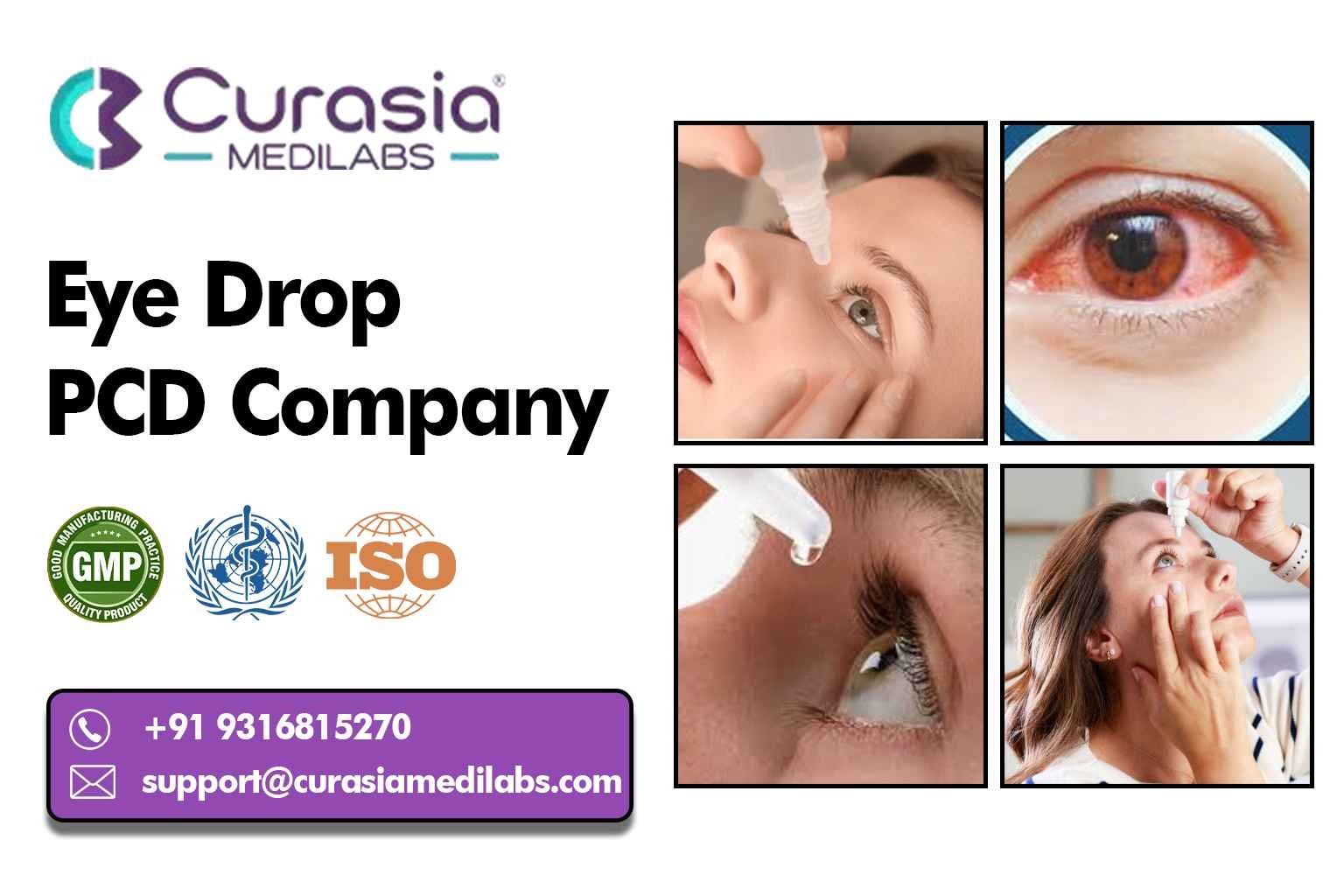
Choosing the right Eye Drop PCD Company puts you in front of a patient base that keeps expanding every year. Screen time has gone up sharply across every age group, dry eye complaints have become routine in optometry clinics, and eye infections remain one of the most commonly treated conditions in general practice. Yet ophthalmic products sit in a corner of the pharma market that relatively few PCD manufacturers have built a serious presence in — which is precisely what makes it interesting for anyone entering the business now.
Three separate patient groups keep this category busy, and they rarely overlap.
Infection-driven demand comes through general physicians and eye specialists treating bacterial conjunctivitis, styes, and post-operative infections. Antibiotic eye drops like Moxifloxacin are standard first-line prescriptions here, and demand stays steady year-round with seasonal spikes during monsoon and dusty summer months.
Lifestyle-driven demand is the newer, faster-growing piece. Extended screen exposure has made digital eye strain and dry eye a mainstream complaint rather than a niche one, pushing lubricant drops and artificial tears well beyond their traditional elderly user base into working professionals and students. What makes this segment particularly useful for a franchise partner is that these products often move through general physicians and even retail counters rather than being confined to ophthalmology clinics, which widens the number of outlets you can realistically supply within a single territory.
Chronic care demand covers glaucoma management, allergic conjunctivitis, and post-cataract care — conditions where patients use the same drops continuously for months or years. This is the most valuable segment for a franchise partner, since it generates predictable repeat orders rather than one-time purchases. Cataract surgery volumes in particular have risen substantially across India as access to ophthalmic care has expanded into smaller cities, and every one of those procedures generates a multi-week course of post-operative drops. Glaucoma patients, meanwhile, often stay on the same prescription indefinitely, which turns a single prescriber relationship into years of recurring orders.
An Eye Drop PCD Company that covers all three categories gives a franchise partner far more to work with than one that only stocks basic antibiotic drops. The practical difference shows up when you’re sitting across from an ophthalmologist who prescribes across the full spectrum — if your catalogue only answers a third of what they write, you become a supplementary supplier rather than their primary one.
The mistakes in this segment tend to be specific rather than general, and most of them come down to not asking an Eye Drop PCD Company the right questions upfront.
Some partners sign with a manufacturer whose entire ophthalmic offering is two or three antibiotic drops, then discover they can’t serve an eye specialist who prescribes across the full range. Others skip verifying sterile manufacturing capability — ophthalmic products require a higher sterility standard than oral formulations, and not every WHO-GMP facility is equipped for it. A few accept a verbal monopoly promise without written territory boundaries, only to find another partner selling the same drops to the same clinics six months later.
Checking a manufacturer’s actual licensing status through India’s Central Drugs Standard Control Organisation takes a few minutes and rules out the worst of these problems before you’ve committed anything.
One more thing worth checking that people routinely overlook: packaging quality. Eye drop bottles and droppers face more handling than tablet strips, and a poorly sealed or leaky dropper generates complaints that land on you rather than the manufacturer. Ask to see actual product samples before signing rather than relying on catalogue photographs — it’s a small step that prevents a fairly common source of early friction.
Curasia Medilabs manufactures ophthalmic formulations as a dedicated category rather than a side item, with products including MOXFLIK (Moxifloxacin 0.5% w/v eye drops) for bacterial eye infections. All formulations are produced in WHO-GMP certified facilities, and the eye drops category sits alongside Injectables, Oral-Dental Creams, Tablets, Syrups, Capsules, Dry Syrups, Ointments, and Protein Powder in the company’s catalogue. The full ophthalmic range is on the eye drops product page.
That multi-category structure is worth paying attention to when comparing manufacturers. An ophthalmologist’s clinic rarely orders eye drops alone — they also need antibiotics, analgesics, and general medicines for the broader patient load walking through the door. Being able to supply all of it from one catalogue simplifies your logistics and strengthens the relationship considerably compared to showing up with a single-category product list.
For a franchise partner, a few specifics matter more than the marketing pitch:
Territory protection. Monopoly rights are granted district-wise, headquarter-wise, or state-wise through the monopoly-based franchise structure, with boundaries defined in the agreement rather than left to interpretation.
Cross-category selling. An Eye Drop PCD Company partnership works far better when you can also supply the general medicine, antibiotic, and pediatric products those same clinics order — all available through the product page.
Regional operating experience. Curasia Medilabs already runs franchise operations across Punjab, Haryana, Himachal Pradesh, and Jammu & Kashmir, which means practical familiarity with how prescriptions actually move in North Indian markets rather than theoretical national coverage.
Promotional material included. Visual aids and product literature come as part of the franchise package, which matters in ophthalmics where prescribers often want composition details before switching brands.
Start by confirming eligibility on the PCD Pharma Franchise page and identifying which districts are currently vacant — this determines whether your preferred territory is even available before you invest time in negotiations with any Eye Drop PCD Company.
Next, keep your documentation ready: Drug License (retail or wholesale), GST registration, Aadhar and PAN card, and a registered business address for billing. Most manufacturers also ask for a security deposit or advance order at this stage.
Then review the franchise agreement properly. The two clauses worth reading twice are territory exclusivity and minimum order quantity — the first protects your market, the second determines your working capital requirement. If bulk production interests you more than distribution, the third-party manufacturing route is a separate option worth considering.
Broader context on where India’s pharmaceutical sector is heading is tracked by industry bodies like IBEF, which is a useful background when assessing long-term viability. For territory-specific queries, the contact page is the fastest route.
The ophthalmic segment rewards partners who take it seriously as a specialisation rather than treating eye drops as a filler category. Demand is genuinely growing across infection, lifestyle, and chronic care use cases, and competition remains thinner than in general medicine or antibiotics. A dependable Eye Drop PCD Company should offer sterile-certified manufacturing, a range wide enough to serve an eye specialist properly, and monopoly terms written clearly into the agreement. Curasia Medilabs covers those bases with WHO-GMP certified ophthalmic products backed by a broader multi-category portfolio, making it a practical starting point for anyone building a business in this space.
An Eye Drop PCD Company supplies branded ophthalmic formulations for distribution within an assigned territory, typically with monopoly rights, promotional material, and pricing support included.
Antibiotic drops such as Moxifloxacin for bacterial infections, lubricant and artificial tear preparations for dry eye, anti-allergic drops, and formulations for chronic conditions like glaucoma.
Yes — chronic eye conditions require continuous medication, and rising screen-related eye strain has widened the customer base considerably beyond traditional elderly patients.
Sterile manufacturing capability, WHO-GMP certification, the actual breadth of the ophthalmic range, and written territory boundaries for monopoly rights.
A Drug License, GST registration, Aadhar and PAN card, a registered business address, and an advance order or security deposit depending on company policy.
October 16, 2026


 Open Product List
Leave a Reply