#2 First Floor Dukheri Road, Mohra District Ambala 133004
support@curasiamedilabs.com
+91-9316815270, 9499164371, 7988871718
#2 First Floor Dukheri Road, Mohra District Ambala 133004
support@curasiamedilabs.com
+91-9316815270, 9499164371, 7988871718

September 7, 2026
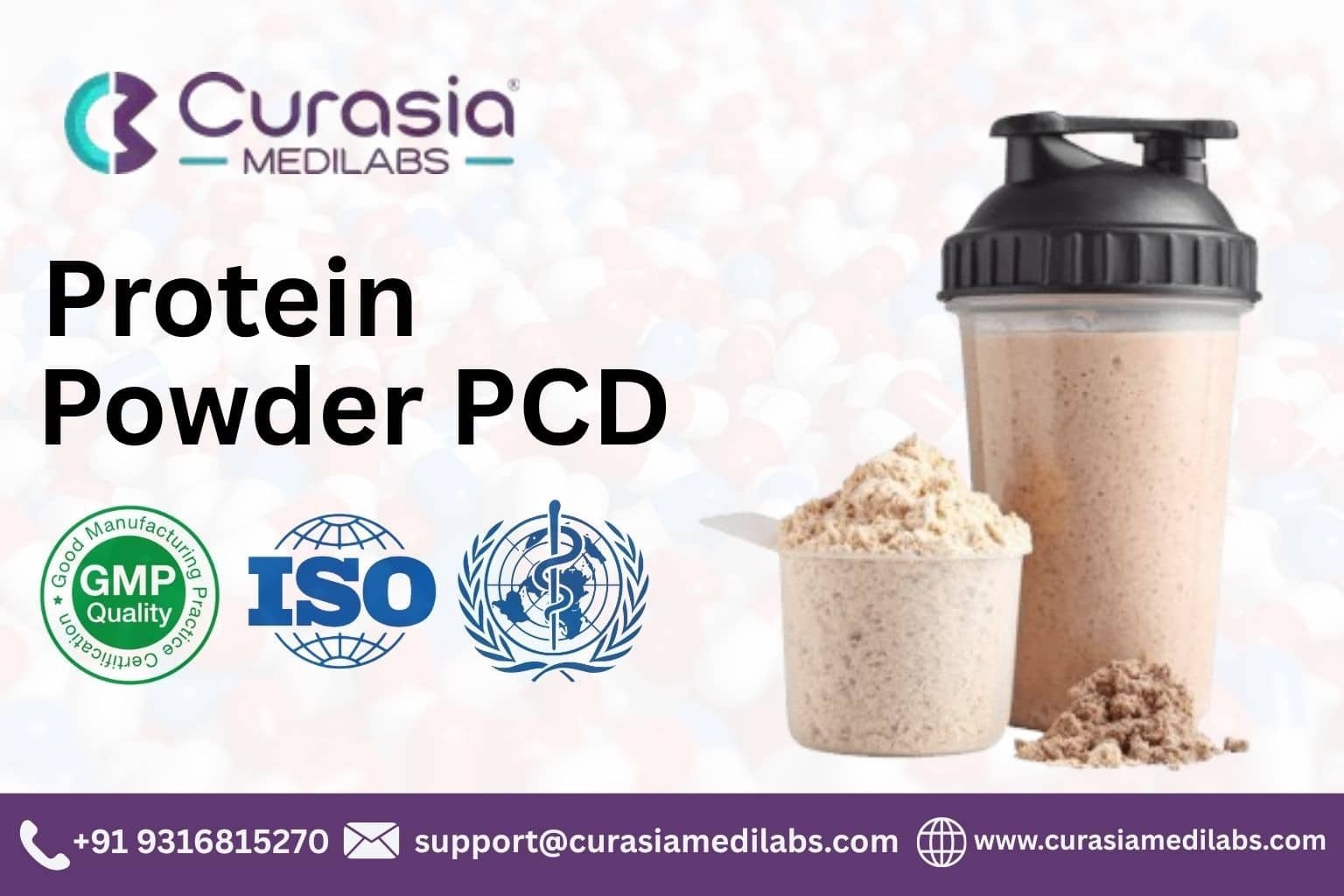
Protein Powder PCD has quietly turned into one of the fastest-growing corners of the pharma franchise business. Fitness awareness, protein-deficiency concerns, and pediatric nutrition needs have all pushed demand up sharply over the past year, and search interest in this exact category has grown by triple digits year-on-year. Unlike general medicine or antibiotics, this segment is still nowhere near saturated — very few PCD companies treat protein supplements as a genuine, dedicated product line rather than an afterthought.
It’s simple in concept: a manufacturer produces branded, ready-to-market protein powder formulations, and a franchise partner distributes them within an assigned territory — usually on a monopoly basis, with marketing material, pricing structure, and product training included as part of the package. It works exactly like a standard PCD pharma franchise, except the product itself sits in the nutraceutical category rather than a therapeutic one, which changes who you’re selling to and how you position it.
A few things are driving the surge behind Protein Powder PCD specifically. Fitness culture has expanded well beyond gyms and bodybuilders — regular working professionals, students, and even elderly consumers are now buying protein supplements for general wellness rather than muscle building alone. Pediatric nutrition has become a parallel driver too, with parents increasingly looking for fortified protein options to support children’s growth, especially in households where picky eating or nutritional gaps are a concern. On the supply side, awareness around protein deficiency in the average Indian diet has been widely discussed in health media, nudging more consumers toward supplementation as a preventive habit rather than a reactive one.
There’s also a structural reason this segment works well for a franchise partner specifically. Protein powder isn’t a one-time purchase the way a short medicine course is — regular users buy it monthly, which means once you build a customer base, revenue becomes considerably more predictable than categories driven by occasional illness. And because relatively few PCD manufacturers have built a genuinely dedicated nutraceutical line, a partner entering this space now faces noticeably less competition than in general medicine, gynae, or orthopedic categories.
Not every manufacturer that lists a protein powder in its catalogue actually specialises in nutraceuticals. A few things are worth verifying before signing on:
You can verify any manufacturer’s actual licensing status through India’s Central Drugs Standard Control Organisation rather than relying on marketing claims alone.
Curasia Medilabs manufactures Cuprot, a protein powder fortified with DHA, GLA, and Colostrum, formulated for high protein content with a sugar-free base. It’s available in chocolate, kesar badam, and vanilla flavours, giving franchise partners a genuine variety to offer rather than a single, one-size-fits-all option. The product is manufactured in WHO-GMP certified facilities, and full details are available on the Cuprot product page.
What makes this a strong Protein Powder PCD option specifically:
Beyond the product itself, being part of a Protein Powder PCD franchise with a company that already runs a diversified pharma business means you’re not building a single-product venture from scratch. If demand in one category slows, the broader basket gives you room to adjust rather than being entirely dependent on protein powder sales alone.
India’s nutraceutical and protein supplement market continues to be tracked by industry sources like IBEF, which shows the broader category growing well beyond fitness-only demand and into mainstream household consumption. For queries specific to the protein powder range, use the contact page.
Protein Powder PCD represents a rare combination in today’s pharma franchise market — genuinely growing demand paired with comparatively little competition. Most PCD manufacturers still treat nutraceuticals as an afterthought, which leaves real room for a focused partner to build market share early. Curasia Medilabs’ Cuprot range, backed by WHO-GMP certification, multiple flavour options, and genuine monopoly rights, makes it a practical and well-supported entry point for anyone looking to add a nutraceutical line to their franchise business rather than sticking purely to conventional medicine.
It’s a business model where a manufacturer supplies branded protein powder formulations and a franchise partner markets and distributes them within a defined territory, usually on a monopoly basis.
Cuprot is Curasia Medilabs’ sugar-free protein powder, fortified with DHA, GLA, and Colostrum, available in chocolate, kesar badam, and vanilla flavours.
Yes, monopoly rights are offered on a district or headquarter basis, alongside the rest of Curasia Medilabs’ broader product range.
Rising fitness awareness, pediatric nutrition needs, and general protein-deficiency concerns have pushed monthly search volume and consumer demand up sharply over the past year.
A Drug License, GST registration, Aadhar and PAN card, a registered business address, and an advance order or security deposit as required by the company.
October 16, 2026



 Open Product List
Leave a Reply