#2 First Floor Dukheri Road, Mohra District Ambala 133004
support@curasiamedilabs.com
+91-9316815270, 9499164371, 7988871718
#2 First Floor Dukheri Road, Mohra District Ambala 133004
support@curasiamedilabs.com
+91-9316815270, 9499164371, 7988871718

August 18, 2026
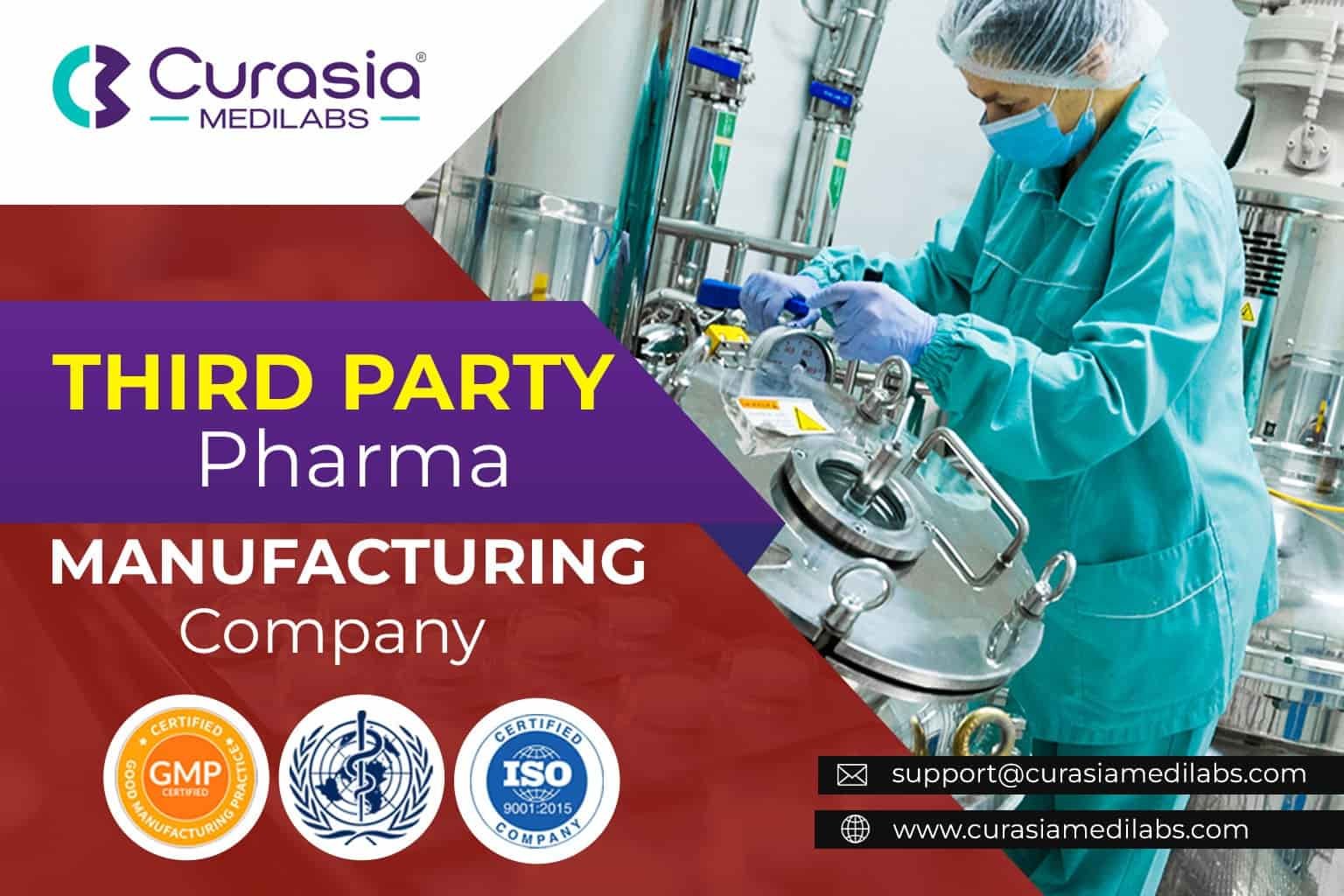
A Third Party Pharma Manufacturing Company is often the fastest, least risky way for a new pharma brand to get off the ground. Setting up your own manufacturing unit takes years of licensing, machinery investment, and quality certification before you can even produce a single batch. Outsourcing that entire process to an established manufacturer lets you focus on what actually grows a business — branding, sales, and distribution — while someone else handles formulation, testing, and packing. Here’s why this model has picked up so much momentum in India, what to check before signing with anyone, and which manufacturer is genuinely set up to handle it.
Contract manufacturing isn’t a new idea, but the scale at which Indian pharma brands are using it has changed a lot in the last few years. New entrepreneurs entering the space simply can’t justify the capital needed to build a compliant manufacturing unit from scratch — land, machinery, GMP certification, and a trained workforce easily run into crores before a single tablet is packed. Working with an established Third Party Pharma Manufacturing Company sidesteps that entirely.
There’s also a practical reason established brands use this model too. Even large, well-funded pharma companies often outsource specific product lines rather than expanding their own factory capacity every time they add a new formulation. It’s simply more efficient to let a specialised manufacturer handle production while the brand owner focuses on marketing and distribution. On top of that, India’s manufacturing infrastructure — particularly in regions with strong pharma clusters — has matured enough that outsourcing no longer means compromising on quality. WHO-GMP and ISO certified facilities are now common enough that finding a genuinely reliable manufacturing partner isn’t the gamble it used to be.
There’s a timing angle worth mentioning too. Pharma clusters across states like Gujarat, Himachal Pradesh, and parts of North India have built up genuinely dense manufacturing ecosystems over the past decade — enough raw material suppliers, packaging vendors, and testing labs clustered nearby that turnaround times have dropped considerably compared to a decade ago. A brand working with a manufacturer based in one of these clusters often gets faster batch cycles and more competitive input costs simply because the whole supply chain is already sitting close together.
Not every manufacturer that advertises “third party manufacturing” runs a tightly controlled operation. Before committing to any Third Party Pharma Manufacturing Company, a few things are worth verifying properly.
Certifications come first — WHO-GMP, ISO, and a valid manufacturing license are non-negotiable, since your brand’s reputation rides entirely on their production quality. You can cross-check a manufacturer’s actual licensing status through India’s Central Drugs Standard Control Organisation rather than relying on a brochure claim. Look at the breadth of dosage forms they can actually produce — tablets, capsules, syrups, injectables, ointments — since a manufacturer limited to one or two forms restricts how far your brand can expand later. Ask about raw material sourcing and batch testing procedures, because inconsistent quality control is usually where things go wrong first. Custom packaging and branding flexibility matter too; you want your product to look like your brand, not a rebadged version of someone else’s design. And pricing transparency is worth pushing on directly — vague costing structures tend to surface as unpleasant surprises once production actually starts.
Curasia Medilabs offers third-party manufacturing across a genuinely wide range of categories — General Analgesics, Antibiotics, Injectables, PPIs, Hematinics, Anti-Allergic, Anti-Cold, Gynecology, and a full neuropsychiatry line covering Anti-Psychotic, Anti-Depressant, Anti-Anxiety, Anti-Convulsant, Anti-Vertigo, and Anti-Alzheimer’s formulations. That range matters if you’re evaluating this as a Third Party Pharma Manufacturing Company option, since it means your brand isn’t limited to a narrow product category as it grows. Full details on the service are available on the third-party manufacturing page.
Production runs through WHO-GMP certified facilities, with quality assurance and laboratory testing built into the process rather than treated as an afterthought. The company also supports custom packaging and design work, so brand owners aren’t stuck with generic, off-the-shelf presentation. Beyond manufacturing, Curasia Medilabs runs its own PCD franchise operations too, which means the team already understands both sides of the pharma business — production and market-facing distribution — rather than approaching manufacturing as an isolated service. More about the company’s background is available on the about page.
If you’re comparing options in this space, here’s what tends to matter most:
Related options worth exploring: the PCD Pharma Franchise model if you’d rather distribute an existing product range instead of building your own brand, or monopoly-based franchise terms if territory exclusivity matters to you. India’s pharmaceutical manufacturing sector continues to be tracked by industry bodies like IBEF, which offers useful context on where the broader market is headed. Direct enquiries can be raised through the contact page.
Going the Third Party Pharma Manufacturing Company route instead of setting up an in-house facility has a few clear advantages. Capital investment drops dramatically — instead of sinking crores into machinery and infrastructure, that money can go toward marketing, sales teams, and building the brand itself. Time to market shrinks too, since an established facility can start production almost immediately rather than requiring months of setup and licensing. Quality risk actually goes down in most cases, because a specialised manufacturer running multiple product lines has more testing infrastructure and experience than a brand-new, single-purpose unit would. And the model scales cleanly — if demand for a product grows, production can usually scale with it without the brand owner having to expand their own factory footprint.
Nothing unusual here, but it’s worth having ready before approaching any manufacturer:
Once these are shared and verified, the manufacturer typically issues a contract manufacturing agreement covering minimum order quantities, batch timelines, and payment terms. Read it carefully — especially the quality assurance and delivery clauses — before signing anything.
Contract manufacturing has become one of the smartest entry points into India’s pharma business, letting new and established brands alike skip the capital-heavy process of building their own facility. A dependable Third Party Pharma Manufacturing Company should offer certified production, a wide dosage-form range, transparent pricing, and genuine packaging flexibility — not just a low quote on paper. The manufacturer profiled above combines WHO-GMP certified manufacturing across General Medicine, Neuropsychiatry, and Gynecology categories with custom branding support, making it a solid partner for entrepreneurs looking to launch or scale a pharma brand without building a factory from scratch.
A Third Party Pharma Manufacturing Company manufactures pharmaceutical products on behalf of another business, handling formulation, production, testing, and packing, while the brand owner manages marketing, sales, and distribution.
Curasia Medilabs is a WHO-GMP certified option offering contract manufacturing across General Medicine, Neuropsychiatry, and Gynecology categories, along with custom packaging support.
Third-party manufacturing produces medicines under your own brand name, while a PCD franchise involves marketing and distributing an existing manufacturer’s ready product range, usually with monopoly rights.
Yes — it removes the need for heavy capital investment in machinery and licensing, letting new entrants focus their budget on branding, marketing, and distribution instead.
Generally a Drug License, GST registration, Aadhar and PAN card, a registered business or brand name, and a list of product formulation requirements.
October 16, 2026


 Open Product List
Leave a Reply